
With the changing culture and developing society brought by the American colonization, Fernando Amorsolo used his imaginative mind to create masterpiece arts, which showcased pure Filipino cultures and helped Filipinos to better understand Philippine history, such as the importance of the Filipino flag and the labour behind it.
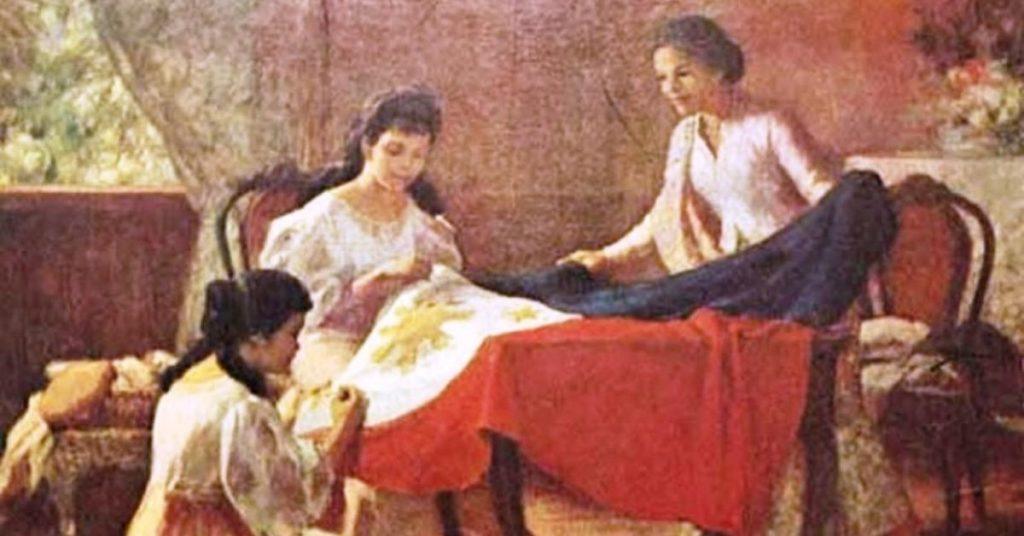
Fernando Amorsolo is one of the most important artists in Philippine History. He is well known for his simple but nostalgic paintings, making him the first ever National Artist of the Philippines. He gave importance to the labour behind making the Filipino flag and through his paintings, filipinos were inspired as well. He was the main reason filipinos began to give importance and appreciate the making of the Filipino flag. He was also named as the “Grand Old Man of Philippine Art,” (Bhandari, 2018). According to Bhandari, he also “developed a backlighting technique, where his colorful depictions of local people reflect the radiance of the Philippine sun. The figures and illuminated landscapes magically glow on the canvas,” (Bhandari, 2018).
The National Artist of the Philippines award is an honorary award given to a Filipino citizen who showed significant contributions to the development of Philippine arts and letter (Official Gazette, 2020). This type of award is granted by the President itself. They are also given a wearable Grand Collar that they can showcase in order to represent the importance of their work to Philippine arts and the county itself.

Growing up in the countryside, Daet Camarines Norte, and during the transition in the Philippines, Spaniards to American colonists, he based his masterpieces from these experiences. He lived a very simple life with his family at Daet and he showed passion for art and for the rural landscape at a very young age. Not long after living a simple life with his family, his brother joined the rebels, whom was caught and executed by the Spaniards. His father was really depressed by the event which gave him heartaches and resulted of a heart attach which caused his death. After such unfortunate events, his mother took him to the City where they battled poverty for a better lifestyle and to receive a proper schooling on arts. Amorsolo painted arts to sell and help pay for his tuition. His efforts and hardworks paid off when he graduated with honours at University of the Philippines School of Fine Arts. He was a member of the first graduating class, (Martinez, 2009).
When he was aging, he saw how Philippines started to change because of the transitioning period in the Philippines. Philippines who under the Spanish colony became part of the United States of America as one of its territories, (Martinez, 2009). The Philippines who was filled with simple lifestyle and traditions such as fiestas, farming and rituals slowly transitioned to a much more complex country because of American influences. He realized that these simple lifestyles and traditions were slowly disappearing so through the form of art, he painted and painted his memories of these simple quiet lifestyles and traditions. At the beginning, these paintings were not given much importance and were not really understood by filipinos. However, it slowly grabbed the attention of many filipinos and people were finally understanding his perspectives through his paintings. People began to realize how important it is to love your own county and your own traditions. This element was one of the reasons he was given and granted a National Artist Award of the Philippines by the president of the Philippines, whom was President Ferdinand Marcos at the time.
Making such headlines and creating such paintings, he became successful at a very young age. He became a professor at the age of early 20’s. He designed one of the most well known liquor company’s logo in the Philippines. The owner offered to send him at Academia de San Fernando in Madrid which were really impressed by his talent and artworks that they offered him a professor job and not just as a student, (Martinez, 2009).
Despite spending time in Madrid and learning the culture of Europe, he still chose to paint rural landmark of the Philippines. European style paintings were really popular at the moment but he bent the curve and made a mark for himself rather than following the social norm in terms of painting. People were drawn to this character of him thus making people buy his artworks and making them as a souvenirs from the Philippines.
However, the second world war started to happen just as he was getting more fame. Although most of his works inspired a lot of filipinos to not forget their roots, he made more mark on Philippine’s history with his paintings representing what was happening during war. As a mater of fact, his wartime paintings were really great that it had its own exhibition at Malacanang Palace in 1948, (Martinez, 2009). One of the most important paintings of his during the second world war was the painting of a woman kneeling beside her dead son. A lot of people were touched by the story behind the painting, because it represented a mother’s love for their sons who’ve gone to war. His paintings got really famous because people were able to connect to them. It told the stories of many people who did not have the power to do so.

Fernando Amorsolo is also known for presenting his pastoral works as “an imagined sense of nationhood in counterpoint to American colonial rule.” He painted the Making of the Philippine flag to remind the Filipinos the beliefs, traditions and customs that had been lost due to the evolving economic. The Making of Philippine Flag by Fernando Amorsolo was among his really important masterpieces. It illustrates three women, Marcella Mario de Agoncillo (mother of the Philippine Flag), Lorenza and Delfina Herbosa de Natividad sewing the first Philippine flag. At the time, filipinos were so focused on the new traditions of Americans and they were slowly forgetting their own traditions and roots. People were so caught up on the new social norms that they did everything even if i it meant forgetting their own traditions just to fit in to the new social norms. According to Andrei Frans, “It is believed that Fernando Amorsolo made this painting to show the citizen of the Philippines of how the Philippine flag was made and to remind them the traditions and customs that we did not realize it becomes faded,” (Franz, 2017). Although it was not easy, with the artworks and paintings of Ferdinand Amorsolo, filipinos were able to better understand and appreciate the story behind the making of the Philippine flag.
Because filipinos were forgetting the importance of loving their own traditions, customs and country, in general, Amorsolo painted the Making of the Flag using colours that invite filipinos and colours that provides warmth when looking at the painting. Aside from painting such masterpieces, he also painted simple paintings that showcase the life on country sides, hardworking farmers, the typical filipino family, fiestas and much more traditions that filipinos used to follow. He painted such paintings in order to remind filipinos how important it is to not forget their roots.

.jpg?w=400)
Reference lists:
- Bhandari, S. (2018, October 31). The 10 Most Famous Filipino Artists and their Masterworks. Retrieved November 18, 2020, from https://theculturetrip.com/asia/philippines/articles/the-10-most-famous-filipino-artists-and-their-masterworks/
- FERNANDO CUETO AMORSOLO (Filipino, 1892-1972) , The Harvesters. (n.d.). Retrieved November 18, 2020, from https://www.christies.com/lotfinder/Lot/fernando-cueto-amorsolo-filipino-1892-1972-the-harvesters-5691231-details.aspx
- Frans, A. (2017, October 16). A Critique Paper on the artwork The Making Of Philippine Flag by Fernando Amorsolo. Retrieved November 15, 2020, from https://andreifrans.wordpress.com/2017/10/16/a-critique-paper-on-the-artwork-the-making-of-philippine-flag-by-fernando-amorsolo/
- Francisco, M. A. (2020, June 15). The mysteries surrounding the first Philippine flag. Retrieved November 17, 2020, from https://www.flipscience.ph/flipfacts/philippine-flag/
- Limos, M. (1970, January 01). The Life and Career of Fernando Amorsolo, The Philippines’ First National Artist. Retrieved November 25, 2020, from https://www.esquiremag.ph/the-good-life/pursuits/national-artist-fernando-amorsolo-life-and-works-a1957-20190624-lfrm
- The Order of National Artists: GOVPH. (n.d.). Retrieved November 14, 2020, from https://www.officialgazette.gov.ph/the-order-of-national-artists/


 My Journey into Culinary!